【原文】
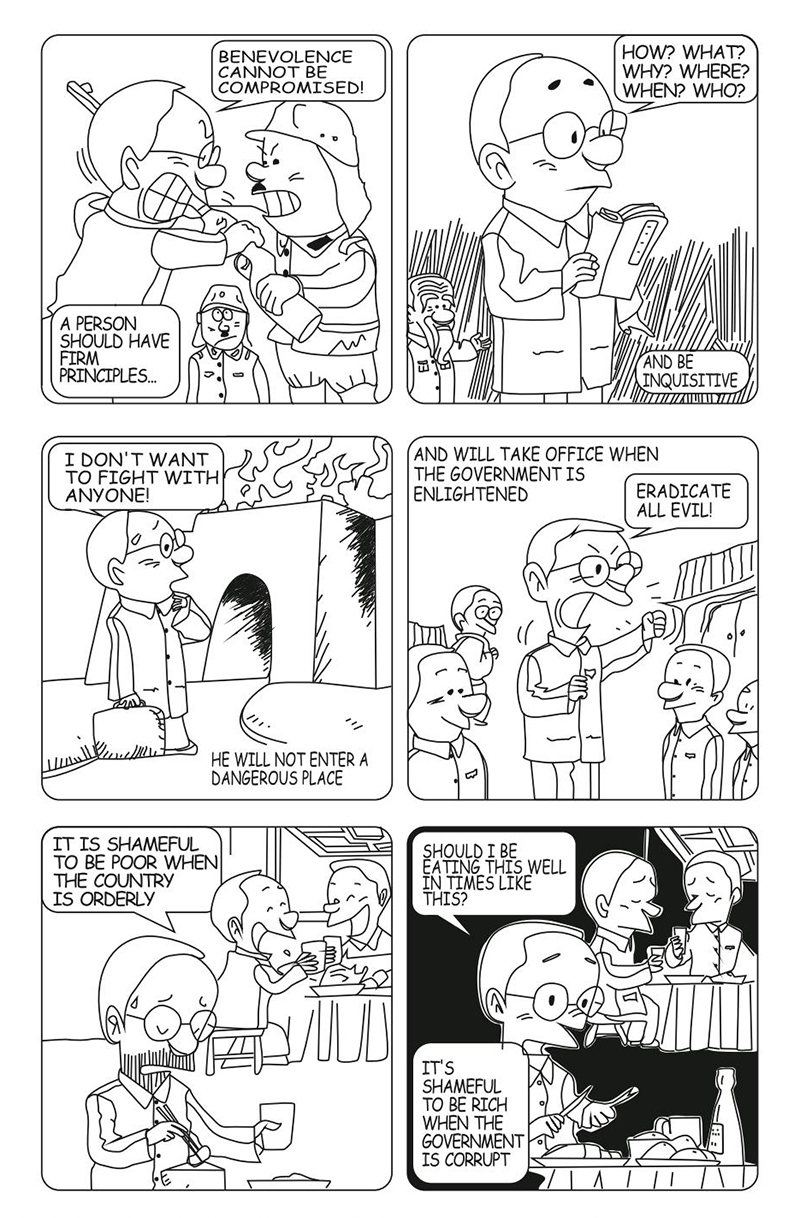
子曰:〝篤信好學,守死善道,危邦不入,亂邦不居。天下有道則見,無道則隱。邦有道,貧且賤焉,恥也;邦無道,富且貴焉,恥也。〞
【參考譯文】
孔子說:〝一個人應該有堅定的信仰和好學的精神,誓死保衛治國做人的正確原則。不去可能有危難的國家,不住在發生動亂的國家。天下政治清明就出來作官,政治黑暗就隱居起來。國家政治清明而自己貧賤,這是恥辱;國家政治黑暗而自己富貴;也是恥辱。〞
【English Translation】
Confucius said: "A person should be trustworthy and fond of learning. He should be unwavering till death when it concerns upholding the way. Do not enter a dangerous state or reside in a rebellious one. He will not prey on a weaker state nor stay in an anarchic state. When a state is orderly, one should avail oneself for government service. When the one’s state is orderly. It is also a shame to be rich when the state is disorderly."
Note: This passage speaks about the importance of holding to one’s principles and taking care not to tarnish one’s name.