13章 子路 (1節)

【原文】

子路問政,子曰:〝先之勞之。〞請益,曰:〝無倦。〞


【參考譯文】

子路詢問政務,孔子說:〝以身作則,吃苦耐勞。〞子路要求多講一些。孔子說:〝做事不要懈怠。〞


【English Translation】

Zi Lu asked about government. Confucius answered: "Lead the people and labour for them, " Zi Lu asked for more.

Confucius said: “Do not slacken in your duties. "
13章 子路 (5節)

【原文】

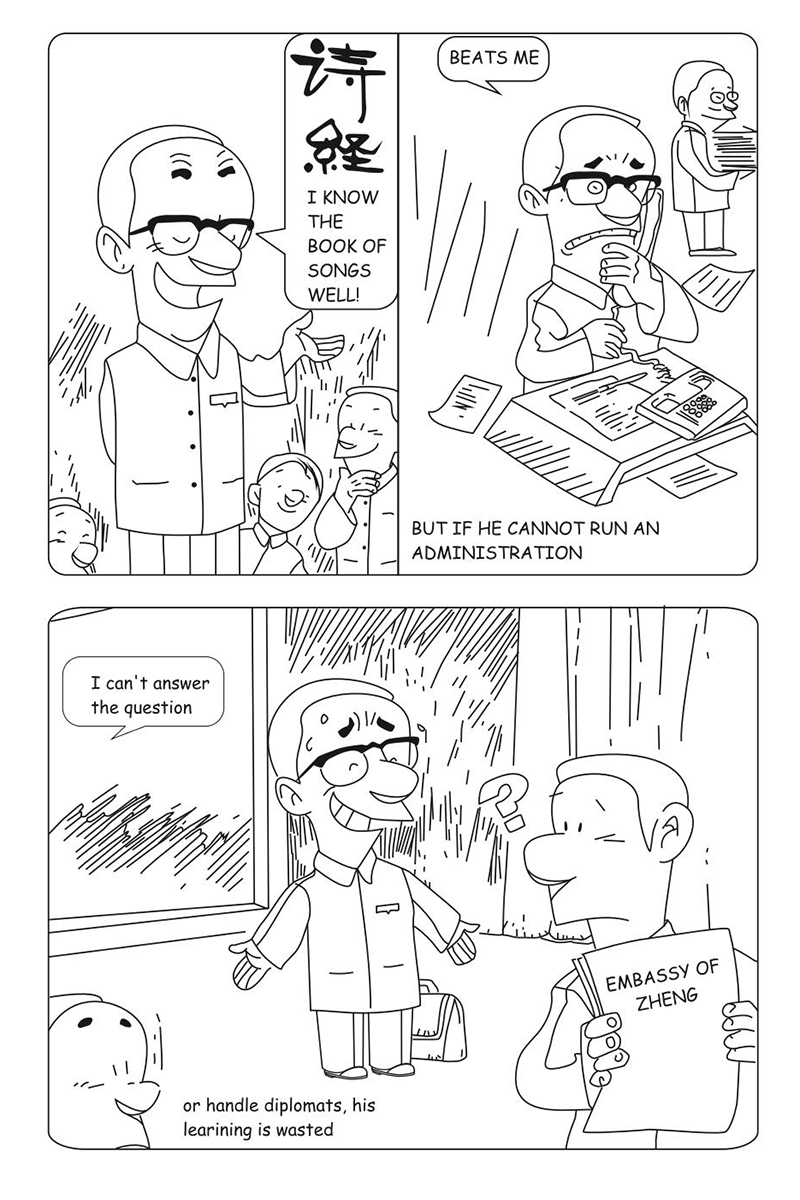
子曰:〝誦《詩》三百,授之以政,不達;使于四方,不能專對;雖多,亦奚以為?〞


【參考譯文】

孔子說:〝熟讀《詩經》三百篇的人,讓他處理政務,卻行不通;讓他出使別國,卻不能獨立應對。讀書雖多,又有什麼用呢?〞


【English Translation】

Confucius said: "Those who are familiar with the 300 poems of The Book of Songs but achieve nothing when appointed to government positions or cannot act independently according to the circumstances have wasted their efforts in studying. "

13章 子路 (6節)

【原文】

子曰:〝其身正,不令而行;其身不正,雖令不從。〞


【參考譯文】

孔子說:〝執政者自身行為端正,不發號令,老百姓也會跟著走;執政者自身行為不端正,就是三番五次下令,老百姓也不會聽從。〞


【English Translation】

Confucius said: "If the ruler is personally upright, the common people will obey him without the need to be given orders. If a ruler is not personally upright in his behaviour, the common people will not obey him even after repeated injunctions. "